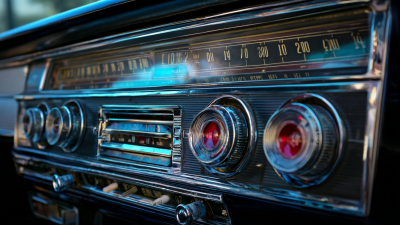
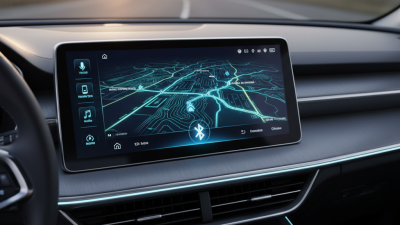
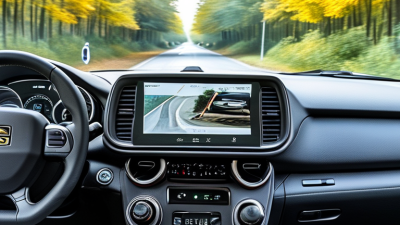
An auto radio is the vehicle’s in-car system for receiving broadcasts and playing audio. In a traditional setup, an antenna captures radio-frequency signals from nearby stations. The tuner selects a station, while internal circuits process the signal and send it to an amplifier. The amplifier boosts the sound for the car’s speakers. Turn the dial, and you are changing which signal the tuner receives. Simple in principle.
The details vary. Some systems receive AM and FM broadcasts; newer units may also connect to phones, navigation systems, or digital audio sources. A display shows station information and settings, while buttons or touch controls let drivers adjust volume and choose inputs. Reception can change with distance, buildings, weather, and the vehicle’s antenna condition. A crackle near a bridge may come from weak reception, not a broken speaker. Small distinction, useful one.
Understanding how an auto radio works can help drivers describe a problem more clearly, such as weak reception, distorted sound, or a display that will not turn on. Still, symptoms can have several causes, including wiring, a fuse, the antenna, or a speaker. A quick guess may be wrong. Check the vehicle manual before changing settings or connections, and ask a qualified technician to inspect electrical issues. Modern systems differ, so one explanation cannot cover every model. That limitation matters. A clear overview is a good starting point, not a substitute for diagnosis.
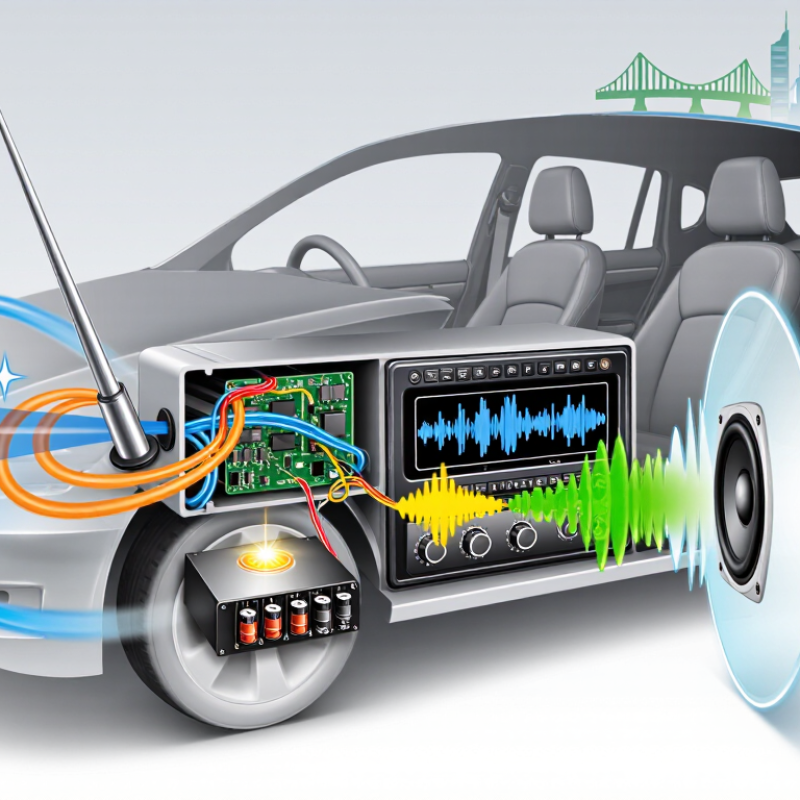
An auto radio is the vehicle’s built-in audio receiver and sound system. It lets drivers listen to broadcast stations, recorded audio, or other connected sound sources. At its simplest, it receives an audio signal and sends it to the vehicle’s speakers. That is the basic job.
Inside the unit, a tuner selects a radio frequency, while electronic circuits process the signal and adjust features such as volume and tone. An antenna helps capture broadcasts; the speakers turn the processed signal into sound. The radio draws power from the vehicle’s electrical system, and its controls let occupants change stations or adjust listening levels. Small details matter. Weak reception, damaged wiring, or a poorly positioned antenna can cause static or dropouts.
Many modern auto radios also manage audio from wired or wireless connections, depending on the vehicle’s equipment. Some connect with navigation or hands-free calling, though those functions are not part of every radio. The term “auto radio” can sound old-fashioned, and that is fair: today’s units may be part of a larger dashboard system. Still, the radio function remains distinct. It receives and plays audio; it does not improve a weak broadcast signal by itself.
| Dimension | What It Is or Does | How It Works |
|---|---|---|
| Basic definition | An auto radio is an in-vehicle electronic unit that receives broadcast radio and plays audio through the vehicle’s sound system. | It selects an audio source, processes the signal, adjusts settings such as volume, and sends the resulting audio to speakers. |
| Radio tuner | The tuner receives and selects radio stations, commonly on AM or FM bands. | It is tuned to a station’s broadcast frequency and separates the desired signal from other received signals. |
| AM reception | AM radio carries information by varying the amplitude of a radio-frequency carrier wave. Frequency allocations vary by region. | The tuner selects an AM signal, and the receiver demodulates it to recover the audio information. |
| FM reception | FM radio carries information by varying the frequency of a carrier wave. In many regions, FM broadcasts are found within approximately 87.5–108 MHz. | The receiver selects the station and demodulates the frequency variations into an audio signal. |
| Antenna | The antenna captures radio-frequency energy broadcast through the air. | It converts part of the incoming electromagnetic signal into a small electrical signal that the tuner can process. |
| Audio processing | Processing circuits prepare the selected signal for listening and may provide balance, fader, tone, or equalizer controls. | The unit decodes or demodulates the source as needed, adjusts audio characteristics, and routes the signal to an amplifier. |
| Amplifier | The amplifier increases the audio signal’s power enough to drive the speakers. | It uses electrical power from the vehicle to turn a lower-level audio signal into a stronger speaker-level signal. |
| Speakers | Speakers convert the amplified electrical audio signal into sound waves inside the cabin. | The signal moves a speaker’s diaphragm, creating pressure changes in the air that people hear as sound. |
| Power supply | Most passenger vehicles use a nominal 12-volt electrical system; the actual voltage varies with operating conditions. | The radio draws power from the vehicle’s electrical system and uses internal circuits to supply the voltages required by its components. |
| Other audio sources | Depending on the unit, sources may include USB, Bluetooth, auxiliary input, or digital radio services available in the region. | The unit receives audio from the selected source and routes it through audio processing and amplification to the speakers. |
| Controls and display | Buttons, knobs, touch controls, or steering-wheel controls let the driver select sources, stations, and listening settings. | Control inputs tell the unit which function to change; the display may show the station, source, track, or settings. |
| In simple terms | An auto radio is both a radio receiver and an audio playback unit. | It captures or receives a source, converts and adjusts its audio signal, amplifies it, and plays it through the speakers. |