How to Choose the Right Fiber Optic Connectors for Your Needs?
Choosing the right Fiber Optic Connectors can greatly impact your network performance. These connectors play a critical role in transmitting data efficiently. With numerous types available, selecting the ideal one for your needs can be daunting.
Fiber optic connectors come in various styles and specifications. Each type offers unique features suited for different environments. For example, SC connectors provide low insertion loss and are easy to connect. Meanwhile, LC connectors are favored for high-density applications. Understanding the specifics is vital for optimal performance.
However, even the best connectors can face challenges. Misalignment and dust can lead to signal loss. Regular maintenance is essential to prevent these issues. Reflecting on your specific requirements before choosing connectors can save time and resources in the long run. Careful selection ensures a reliable connection that meets current and future demands.
Understanding Different Types of Fiber Optic Connectors Available
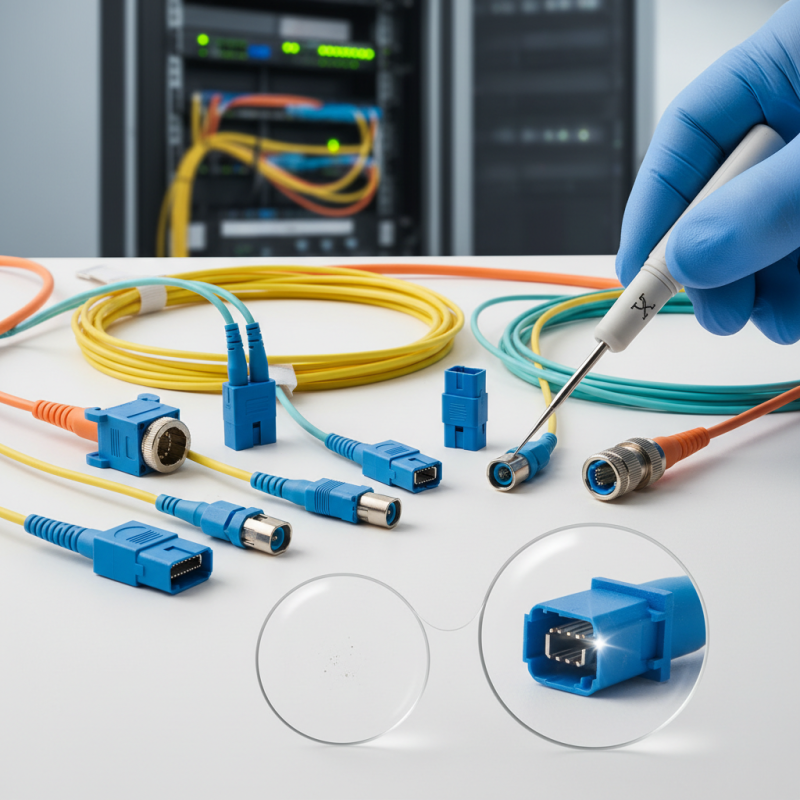
When selecting the right fiber optic connectors, understanding the available options is crucial. There are various types of connectors, each suited for specific applications. Some common types include LC, SC, ST, and MTP connectors. LC connectors are compact and commonly used in high-density installations. SC connectors, on the other hand, are larger and more robust.
Each type has its own advantages. For instance, ST connectors have a bayonet-style coupling, making them easy to connect and disconnect. MTP connectors support multiple fibers and are essential for high-speed data applications. However, the complexity of choosing the right type can lead to confusion.
Consider the required application before making your choice. Think about factors like space, speed, and environment. Not choosing the right connector can lead to connectivity issues. The design and coupling method of each connector can affect performance. Some designs fail in harsh environments, while others might not fit your equipment properly. Always reflect on your specific needs. A little research can save you a lot of trouble down the line.
Fiber Optic Connector Types and Their Applications
Factors to Consider When Choosing Fiber Optic Connectors
When selecting fiber optic connectors, consider the environment where they will be used. Harsh conditions can damage sensitive connections. For outdoor setups, select connectors with weather-resistant features. Ensure they can withstand UV exposure and moisture. Indoor environments may require different specifications, focusing instead on durability and installation efficiency.
Connector types are crucial in decision-making. There are SC, LC, and ST connectors, each designed for specific applications. SC connectors provide easy insertion and removal, while LC connectors are compact for high-density installations. Think about your space limitations and how the connectors will fit into existing systems. It's easy to overlook this detail, yet it can impact overall performance.
The choice of material is another consideration. Most connectors are made of plastic or metal. Metal connectors are durable but can be expensive. Plastic connectors are lighter and cheaper but might not offer the same longevity. Reflect on the long-term costs versus initial savings. Sometimes, cheap options lead to more significant expenses down the line due to replacements or repairs. Choose wisely.
How to Choose the Right Fiber Optic Connectors for Your Needs? - Factors to Consider When Choosing Fiber Optic Connectors
| Connector Type | Application | Key Features | Advantages | Disadvantages |
| SC | Telecommunications | Push-pull design, low insertion loss | Easy to use, reliable | Larger footprint |
| LC | Data Centers | Small form factor, duplex connector | Space-saving, high density | Can be difficult to connect |
| ST | Local Area Networks | Bayonet coupling, robust design | Secure connection, durable | Bulkier than other connectors |
| MTP/MPO | High-density applications | Multi-fiber connectivity | Supports multiple fibers, fast deployment | More complex to manage |
| FC | Telecommunication | Screw-on mechanism | High performance, stable connection | Less common, requires careful handling |
Evaluating Connector Performance and Compatibility with Devices
Choosing the right fiber optic connectors is crucial for optimal performance. Evaluating connector performance starts with understanding loss characteristics. Connection loss should ideally be below 0.3 dB. Some reports indicate that improper alignment can lead to losses exceeding 1 dB. Compatibility with devices also matters. Different devices may require specific connector types or configurations.
Tip: Always check the manufacturer's specifications. This ensures you’re selecting the correct connector for your application.
Fiber optic standards can vary. The two most common types of connectors are SC and LC. Each type serves different compatibility needs, influenced by device ports. Understanding these nuances can prevent connection failures. Blind adoption of connector types can be a costly mistake.
Tip: Consider future upgrades when choosing connectors. This foresight can save on additional expenses later.
In practice, measuring performance can be tricky. Environmental factors like temperature can alter performance. A connector that works in one setting may fail in another. Regular testing can help identify these inconsistencies. Adjustments may be necessary to maintain optimal performance across varying conditions.
Installation and Maintenance Tips for Fiber Optic Connectors
When it comes to installing fiber optic connectors, proper preparation is essential. Start by ensuring a clean workspace. Dust and debris can easily interfere with connections. Use a lint-free cloth to wipe down the surfaces before you begin. Make sure your tools are ready, including a fiber stripper and cleaver. Rushing can lead to mistakes. Take your time to measure and cut the fiber accurately.
During installation, pay attention to the angle of the connector. Improper angles can cause signal loss. It’s crucial to follow specific guidelines for each type of connector. Make sure to check the termination process several times. A misaligned fiber can cause issues down the line. While it may seem tedious, verifying each step can save you from future headaches.
Maintenance is equally important. Regularly inspect connectors for signs of wear or contamination. Dust caps are helpful but not foolproof. Consider investing in a cleaning kit specifically designed for fiber optics. Remember, neglecting maintenance can lead to expensive repairs. Having a checklist can help keep you organized. If you notice performance issues, don't hesitate to revisit your installations. Small oversights can grow into larger problems.
Cost Considerations and Budgeting for Fiber Optic Connectors
When budgeting for fiber optic connectors, consider the project size and scope. A small installation might only need a few connectors, while a larger project could require dozens or even hundreds. Each connector type has a different price point, so it’s important to understand your specific needs.
Tips: Research the costs of various connector types. Look for standard connectors; they often come at a lower price. Ensure you get quotes from multiple sources to compare.
Quality matters, but so does cost. Higher quality connectors may initially seem expensive. However, they can save money in the long run by reducing maintenance and replacement needs. Assess the trade-offs between cost and durability.
Tips: Don’t overlook shipping and installation costs. These can add up quickly. Take time to factor in all expenses for a true budget.
Finally, always allocate a buffer in your budget for unexpected costs. Fiber optic projects can often have hidden expenses. Avoid overspending by planning ahead and being flexible.