What Are the Top Rental Door Lock Types in 2026?
Choosing a Rental Door Lock in 2026 means balancing resident convenience, property protection, and the daily realities of turnover. A keypad can simplify access changes between tenants. A smart lock may offer remote management, but it also depends on power, connectivity, and clear account controls. Traditional deadbolts remain familiar and straightforward. No single type fits every building.
Security technologist Bruce Schneier’s well-known reminder, “Security is a process, not a product,” offers a useful lens for comparing these options. A lock works within a larger routine: staff manage keys or codes, residents secure doors, and owners maintain hardware. Details matter. A loose strike plate, a low battery warning, or unclear move-out procedures can undermine an otherwise capable device. This is easy to overlook.
This guide examines common Rental Door Lock types, including keyed deadbolts, keypad locks, connected smart locks, and access-control systems. It considers installation, tenant turnover, audit features, maintenance, and compatibility with existing doors. Product claims deserve scrutiny, especially when connectivity or app support is involved. The right choice depends on the property, not just the feature list. A small walk-up and a managed apartment building may need different solutions. There are trade-offs, and some are inconvenient. The comparison ahead is designed to help landlords and property managers ask better questions before choosing a lock for 2026.
How Rental Door Locks Are Classified in 2026
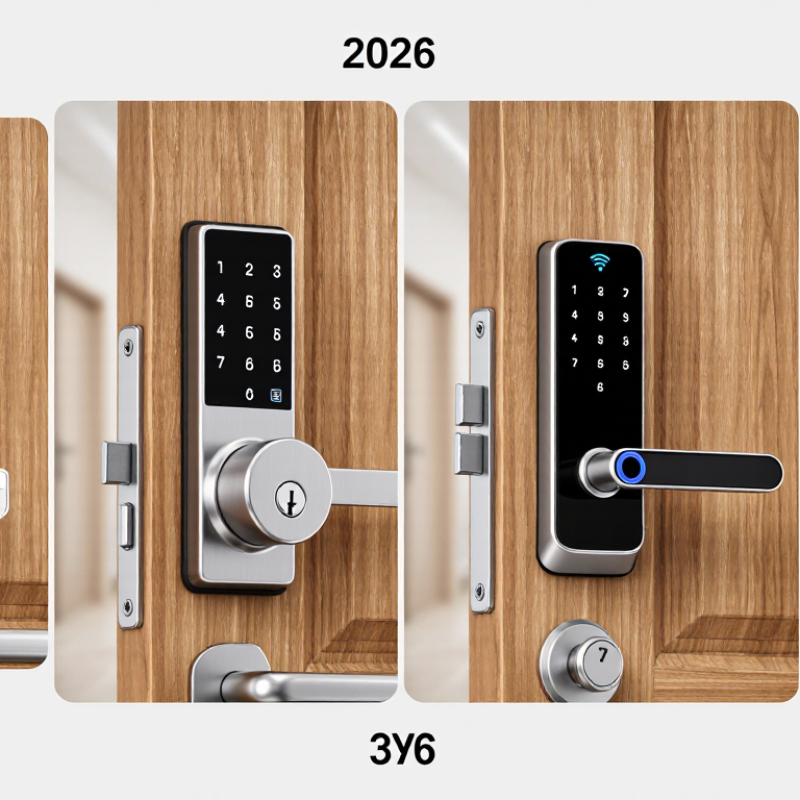
Rental door locks are classified by mechanism, credential, and installation—not simply by “smart” or “traditional.” Mechanical locks use a key or thumb-turn. Electronic models use a keypad, card, fob, or mobile credential. Some combine these methods, which helps when a tenant’s phone battery is dead.
The physical format matters too. Cylindrical locks are common on standard doors; mortise locks fit into a pocket cut into the door edge. Deadbolts provide a separate locking bolt. These formats are not interchangeable without checking door thickness, bore holes, and frame alignment. ANSI/BHMA standards grade certain lock categories through tests of strength, cycle endurance, and operation. Grade alone, however, does not prove a lock suits every rental door.
Smart locks form another category, defined by electronic control and connectivity. A 2024 Global Market Insights report estimated the global smart-lock market at about $2.9 billion in 2023 and projected growth through 2032. That signals industry expansion, not guaranteed renter demand. For property teams, compare audit logs, credential changes, battery alerts, and mechanical backup. Small detail. A tidy classification can still mislead: connectivity may fail, and a basic keyed lock may fit an older door better.
Keypad Locks for Shared and Short-Term Rentals
For shared homes and short stays, keypad locks make arrivals simpler: guests enter a temporary code instead of collecting a physical key. A 2023 annual report from a leading short-term-rental platform recorded 448 million nights and experiences booked, illustrating the scale of guest turnover. That matters. Property managers can assign a separate code to each reservation and set it to expire after checkout. A cleaner arriving at 11 a.m. can receive a different access window from a guest checking in at 4 p.m.
Convenience is not the same as security. Choose a lock with clear battery alerts, a mechanical backup, and an access history that managers can review. Test the keypad from the porch, not just inside: rain, glare, and hurried guests expose small design flaws. Keep codes unique, avoid sharing them in public messages, and remove access promptly when a booking changes. NIST’s Cybersecurity Framework 2.0 groups security work into six functions, including Protect and Detect; rental operators can apply that thinking by limiting access and reviewing entry records. Still, a keypad cannot stop every mistake. Guests may misread instructions, and batteries can fail at the worst moment. Keep a tested backup plan.
Smart Locks with App, Code, and Remote Access
For rental homes, a smart lock is useful when it makes arrivals easier without adding daily hassle. App access lets a host unlock the door remotely if a guest arrives late, while keypad codes work for visitors who do not want to install an app. Choose a model that can create time-limited codes and show when a code was used. That record can help clarify a missed check-in. Check the door’s thickness, latch, and existing deadbolt before buying; not every lock fits every rental door.
Remote access depends on a stable connection, and a dead battery can still cause trouble. Look for clear low-battery alerts, but do not treat them as a guarantee. Keep a tested backup entry method and explain it to the person managing the property. Simple is better. Give each guest a separate code, set its active period carefully, and remove access after checkout. App permissions also deserve attention: share only the access needed, and review who can manage the lock. One detail is easy to overlook: changing a code is not the same as changing a shared account password. Smart locks can reduce key handoffs, but they still need routine checks and a clear plan for outages.
What Are the Top Rental Door Lock Types in 2026?
Typical access features by lock type
Connected keypad locks combine PIN entry with app and remote controls, making them a versatile option for rentals. Feature availability varies by model: remote access may require Wi-Fi or a hub, and retrofit locks may need an add-on keypad for PIN entry.
How to Match Lock Types to Rental Property Needs
A rental lock should fit the way a property is used, not just look secure. A keyed deadbolt is often a straightforward choice for a small unit with stable occupancy. It offers a familiar backup key, but key handovers and replacements can become tedious when tenants change often. Check that the door and frame are solid; even a good lock cannot compensate for loose hardware.
For frequent turnovers, a keypad lock can reduce key exchanges and make access updates simpler. It may suit furnished rentals or properties with scheduled cleaning visits. But batteries need checking, and guests may forget codes. Keep a clear backup plan. A key override can help, though it should be stored securely and managed carefully.
Smart locks can support remote access logs and temporary codes, which may help owners managing properties from a distance. They also depend on power, connectivity, and sensible account settings. A traditional lock may be more dependable where internet service is inconsistent.
Match the hardware to the door, turnover frequency, and who needs access. Then verify installation guidance and applicable safety requirements.
One detail is easy to miss: residents need a reliable way to exit, even when electronics fail. A perfect feature list means little if daily use feels confusing.