An Automatic Motocross Bike removes manual clutch work from off-road riding. Instead, it manages power delivery through an automatic transmission, centrifugal clutch, or continuously variable system. This design can help beginners focus on balance, braking, body position, and track awareness. It can also support experienced riders who want smoother control during technical sections.
Picture a muddy corner, a low jump, and a sudden change in traction. A well-tuned automatic system may reduce missed shifts and engine stalls. However, it does not make motocross effortless. Riders still need accurate throttle control, strong leg pressure, and disciplined braking habits. Some models use electric power, while others rely on compact gasoline engines. Their responses can feel very different.
Choosing an Automatic Motocross Bike requires more than reading a feature list. Weight, suspension adjustment, seat height, power delivery, maintenance access, and rider experience all matter. Manufacturer specifications provide useful starting points, but real behavior depends on terrain and setup. A bike that feels calm on a practice track may feel demanding in deep sand.
The term can also create confusion. Automatic does not always mean beginner-friendly. That assumption deserves careful thought. Riders should test the controls in a legal, supervised riding area and wear suitable protective equipment. This guide examines how automatic motocross systems work, where they perform well, and what compromises buyers should expect. Some answers are less exciting than marketing suggests. Reliability, fit, and predictable handling usually matter more than novelty.
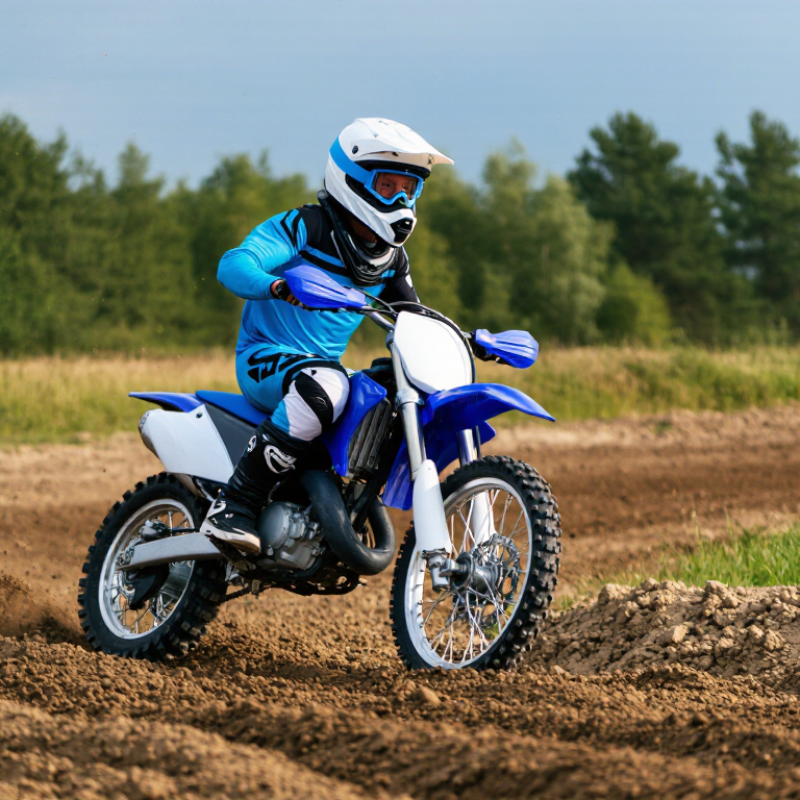
An automatic motocross bike is an off-road motorcycle that changes gears without requiring the rider to operate a hand clutch and shift manually. “Automatic” does not always mean a car-style gearbox. Some designs use a centrifugal clutch, which engages as engine speed rises; others use electronically controlled or continuously variable systems. The rider still manages throttle, brakes, balance, and line choice. No clutch lever. Less hand work, but not less skill.
Core characteristics matter most under changing track conditions. On a rutted corner, a clutch-free system can reduce one task while the rider keeps both hands focused on steering and throttle control. Transmission design, gearing, engine response, and added system weight still affect handling. The FIM’s 2024 Motocross World Championship technical regulations define machine classes by engine specifications, not by a separate “automatic” category. That distinction is useful: automatic describes a transmission feature, not a standardized performance class. A specific industry-wide share of automatic motocross bikes is not established in those regulations, so claims about their prevalence need another clearly identified dataset. Even the word automatic can be imprecise. Check how the transmission behaves at low speed, where a small throttle movement can change traction on loose soil.
| Dimension | Definition or Typical Characteristic | Practical Meaning |
|---|---|---|
| Definition | An off-road motorcycle designed for motocross-style riding that reduces or removes the rider’s need to operate a conventional hand clutch and manually select gears. | The rider can focus more on steering, balance, braking, and throttle control. “Automatic” describes the transmission or clutch operation, not the bike’s suspension or other systems. |
| Automatic operation | Depending on the design, the bike may shift gears automatically, use a clutch that engages without a hand lever, or combine automatic clutch operation with other transmission arrangements. | Automatic motocross bikes are not all mechanically alike. The term should not be assumed to mean that every model has a fully automatic transmission. |
| Clutch control | A clutchless design removes the need for routine manual clutch-lever operation. Some systems still have a clutch internally; the system manages its engagement. | Riders may find starts and low-speed control simpler, but throttle use and gear selection—where applicable—still require appropriate technique. |
| Transmission | Transmission layouts vary by motorcycle. Some use automatic gear changes, while others retain selectable gears with automatic clutch action. | Check the specific bike’s controls and operating instructions before riding; “automatic” alone does not identify the gear-change method. |
| Engine and power delivery | Engine type, displacement, and power characteristics vary. Automatic operation does not specify whether the engine is two-stroke or four-stroke. | Choose an engine and power level suited to the rider’s experience, track conditions, and applicable class rules. |
| Motocross chassis | Like other motocross motorcycles, these bikes are intended for off-road tracks and typically have long-travel suspension, knobby tires, and ground clearance suited to uneven terrain. | They are built for dirt-track use rather than everyday road travel; road legality depends on the individual motorcycle and local regulations. |
| Rider skill and use | Automatic clutch or shifting systems can reduce the coordination required for clutch and gear operation, but they do not remove the need for off-road riding skills. | Riders still need to learn safe braking, body positioning, traction management, and track etiquette. |
| Maintenance | Maintenance requirements depend on the engine, transmission, clutch system, and manufacturer’s service schedule. | Regular inspection of the chain, brakes, tires, air filter, and other components remains important. Follow the owner’s manual for service intervals and procedures. |
What Is an Automatic Motocross Bike?
How the Automatic Transmission System Works
An automatic motocross bike changes gearing without a hand-operated clutch lever. The rider controls speed mainly through the throttle. Inside, the transmission responds to engine speed, load, and rear-wheel resistance. Many systems use a centrifugal clutch, which engages as engine rpm rises. Other designs use a continuously variable transmission with adjustable pulleys. These pulleys alter the gear ratio while the bike moves. The result feels smooth on loose soil, steep climbs, and tight turns.
An electronic system may monitor throttle position, wheel speed, and engine rotation. It then adjusts shifting behavior for traction and acceleration. This reduces clutch mistakes, especially when a rider lands hard or enters a corner too quickly. However, automatic does not mean effortless. Throttle control still requires discipline. I have found that riders often expect instant power, but poor body position can still cause a mistake. The system helps, yet it cannot replace practice or mechanical inspection.
Tips: Check transmission fluid, belt or chain condition, and clutch response before riding. Test the bike at low speed first. Listen for slipping, rattling, or delayed engagement. Keep both feet ready on technical ground. Read the service instructions carefully, because transmission settings differ between models. A short practice session can reveal more than confidence alone.
An automatic motocross bike uses a transmission that reduces or removes manual clutch and gear changes. It is not a self-riding machine. The rider still controls speed, balance, braking, and direction. Its power unit may use a compact combustion engine or an electric motor. A continuously variable transmission or automatic gearbox delivers power with fewer interruptions. Some systems adjust shifting through electronic control.
Key components shape the riding experience. The throttle responds quickly, while the control unit manages power delivery and traction. A strong frame supports the engine, battery, and suspension loads. Long-travel front forks and a rear shock absorb landings, ruts, and uneven soil. Spoked wheels, knobby tires, and hydraulic disc brakes provide grip and stopping control. The details matter.
On a practice track, automatic drive can help beginners focus on body position and corner entry. There is less clutch work during tight turns. Riders can keep both hands steady and react faster when the rear wheel loses traction. However, automatic systems may feel less predictable on steep climbs or loose corners. Power can arrive too suddenly if the throttle map is poorly tuned. I have found that smooth throttle movement still matters more than technology. It is easy to rely on automation too much. Riders should inspect belt or chain condition, brake feel, suspension settings, and battery or fuel levels before every session. Small setup errors become obvious after one hard landing.
What Is an Automatic Motocross Bike?
Advantages and Limitations for Motocross Riders
An automatic motocross bike uses an automatic or semi-automatic transmission instead of a manual clutch system. The rider manages throttle, braking, body position, and line choice. Gear changes happen with less hand movement. That matters when landing from a jump or standing through deep ruts. Less clutch work can also reduce fatigue during long practice sessions. It may help newer riders maintain smoother acceleration. The learning curve feels gentler.
The limitations become clear at race pace. Manual control lets experienced riders select engine braking, wheelspin, and exact gear timing. Automatic systems can reduce that connection. Extra transmission hardware may also increase weight and maintenance demands. Every kilogram matters when lifting the bike from a muddy corner. The Motorcycle Industry Council’s 2023 owner survey shows that rider confidence and control remain major ownership priorities, but it does not measure automatic motocross bikes specifically. That gap deserves attention.
Safety data needs careful interpretation. The U.S. National Highway Traffic Safety Administration reported 5,932 motorcyclist fatalities in 2021, but those figures cover public roads, not motocross tracks. Still, they reinforce the value of training, protective equipment, and predictable control inputs. Automatic transmission cannot correct poor braking technique or bad judgment. I have seen riders focus on the easier shifting and ignore body position. That is a costly mistake. The technology helps, but it does not replace practice.
This relative 1–5 index summarizes common rider considerations. Automatic systems reduce clutch and gear-selection workload and lower the risk of stalling, while manual transmissions generally provide more direct control over gear choice, engine braking, and power delivery.
An automatic motocross bike changes gears without a manual clutch lever. Most models use a continuously variable transmission or an automatic shifting system. This design helps beginners focus on balance, braking, and throttle control. It can also help younger riders build confidence on controlled tracks. However, automatic does not mean effortless. A sharp throttle can still surprise an inexperienced rider.
Choose the bike according to rider height, weight, skill, and terrain. Both feet should touch the ground comfortably when the rider stops. Check the throttle response before riding quickly. A smooth response is easier to manage on loose soil. For practice tracks, moderate power usually works better than maximum output. More power may feel exciting, but it can reduce control.
Inspect the suspension settings and seat height carefully. A rider who feels cramped may struggle during standing sections. Electric starting can be convenient after a fall, especially during long training sessions. Battery access and charging requirements also deserve attention. Ask a qualified technician to explain maintenance intervals, belt or chain wear, brakes, and cooling parts. Small details matter.
Protective equipment remains essential. Use an approved helmet, goggles, boots, gloves, and body protection. Ride only in permitted areas and follow local track rules.
I would not choose a bike by appearance alone. A slightly slower model may teach better habits. That is easy to overlook. Test rides should begin on flat ground, with gradual throttle input and frequent stops.


