Choosing a car music system is not simply a matter of buying the loudest speakers. The right setup should match your vehicle, listening habits, budget, and daily driving conditions. A compact hatchback may need different equipment from a large SUV, especially when cabin space and factory wiring differ. Before comparing products, inspect the dashboard opening, speaker sizes, power ratings, and available connection options. Small details matter.
I learned this after choosing an amplifier that looked impressive but overwhelmed my original speakers. The sound became harsh instead of clearer. That mistake taught me to evaluate the entire system, not one attractive component. These seven practical tips will help you compare head units, speakers, subwoofers, amplifiers, and sound-processing features with greater confidence. Check independent specifications, warranty terms, installation requirements, and user feedback from similar vehicles. Manufacturer claims are useful, but they do not tell the whole story.
Listen carefully.
A reliable car music system should produce balanced vocals, controlled bass, and clean detail at ordinary volume levels. It should also remain convenient during real journeys, including navigation, phone calls, and changing road noise. Professional installation may prevent rattles, wiring faults, and unnecessary battery strain. Still, expensive equipment cannot fix poor speaker placement or incorrect tuning. Consider your priorities honestly, and leave room for revision. Your first choice may not be perfect, and that is normal. The goal is enjoyable, safe, and dependable listening rather than impressive numbers alone.
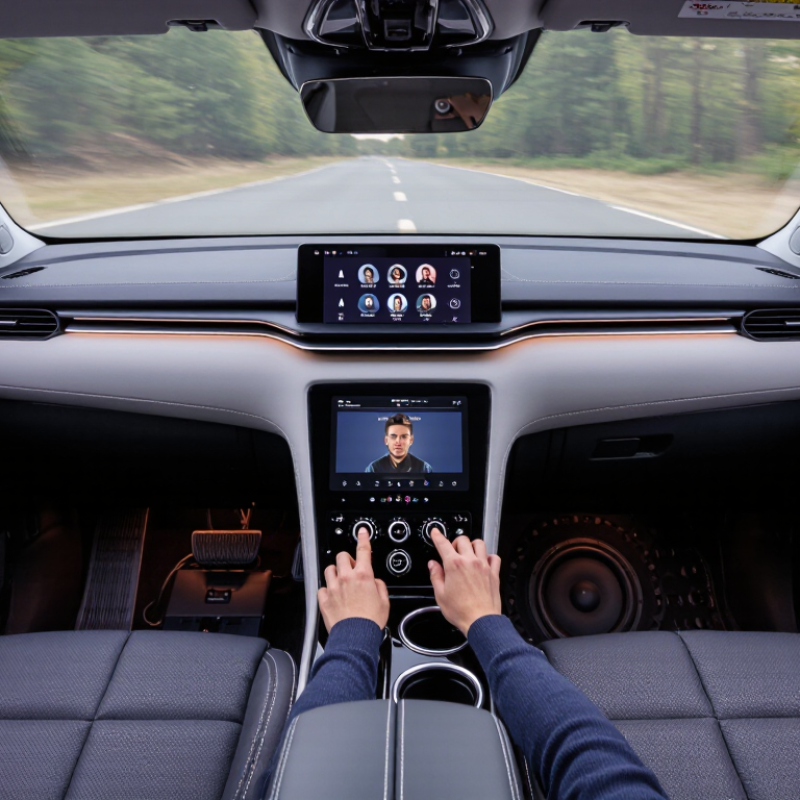
Define Your Audio Goals and Listening Preferences
A car music system should match your real listening habits, not showroom excitement. I once preferred heavy bass, but long drives exposed its fatigue. That assumption failed.
Start by identifying your main sources: streaming music, podcasts, radio, or downloaded files. Edison Research and Triton Digital’s Infinite Dial 2024 reports that 76% of Americans aged 12 and older listened to online audio during the previous week. That figure supports choosing a system with stable smartphone connectivity and clear voice reproduction. If podcasts dominate your commute, midrange clarity matters more than powerful bass.
Think about your driving environment, too. Road noise can hide quiet vocals and detailed instruments. A 2024 study from the National Highway Traffic Safety Administration emphasizes that drivers must remain attentive to surrounding sounds. Your system should sound clear without demanding extreme volume. Try familiar recordings before buying. Use acoustic music, spoken content, and bass-heavy tracks. Listen from the driver’s seat.
Be honest about your habits. You may rarely need concert-level output. You may value simple controls more than advanced equalization. The Consumer Technology Association’s 2024 market research continues to show strong household reliance on connected devices, making seamless device pairing increasingly practical. Still, compatibility claims can be confusing. Check your phone, file formats, steering-wheel controls, and installation space carefully. Small details matter.
| Tip | Audio Goal or Preference | Recommended System Characteristics | Useful Technical Considerations | Practical Selection Check |
|---|---|---|---|---|
| 1 | Define how you want your music to sound | Choose a balanced system for natural vocals, a detail-focused system for acoustic music, or a bass-focused setup for electronic and hip-hop music. | A balanced response generally avoids excessive peaks in the bass, midrange, or treble. Subwoofers are designed to reproduce low frequencies that small car speakers cannot reproduce efficiently. | Write down your three most-played music styles and identify whether you prefer accuracy, warmth, loudness, or strong bass. |
| 2 | Match the system to your listening volume | For moderate listening, quality speakers with efficient power handling may be sufficient. For high-volume listening, consider an amplifier and speakers designed for higher continuous power. | Speaker sensitivity indicates how loudly a speaker can play with a given amount of power. Higher sensitivity can be helpful in vehicles with limited amplifier power. | Listen at your usual volume and check whether vocals remain clear when the bass and overall level are increased. |
| 3 | Assess the factory head unit and audio sources | Choose equipment that works with your existing receiver or plan for a receiver with the connections and features you actually use. | Common sources include Bluetooth, USB, digital radio, and wired connections. A system should also support the required preamp, speaker-level, or amplifier connections. | List the devices and services you use, then verify compatibility before selecting a new receiver or signal processor. |
| 4 | Choose speakers that fit the vehicle | Select speakers with the correct diameter, mounting depth, bolt pattern, and connector requirements for the vehicle doors or dashboard. | Many factory door locations use separate woofer and tweeter positions. Component speakers can improve front-stage separation, while coaxial speakers are generally simpler to install. | Measure the available mounting depth and confirm whether adapter brackets or wiring adapters are required. |
| 5 | Plan bass performance realistically | Use upgraded front speakers for a cleaner overall sound, and add a dedicated subwoofer when deep, powerful bass is a primary goal. | A sealed enclosure typically provides controlled bass, while a ported enclosure can produce greater output around its tuned frequency but requires more space and careful design. | Decide how much cargo space you can give up and whether you need a compact powered subwoofer or a separate amplifier and enclosure. |
| 6 | Improve installation and cabin acoustics | Prioritize secure mounting, correct polarity, vibration control, and suitable door treatment before adding excessive equipment. | Door panels can vibrate and absorb energy. Proper damping and sealing can reduce unwanted resonance and help speakers produce more controlled mid-bass. | Check for rattles, confirm positive and negative speaker connections, and compare the sound before and after basic vibration treatment. |
| 7 | Set a complete-system budget | Balance the budget across speakers, receiver or signal integration, amplification, wiring, installation, and acoustic treatment. | Adding one high-output component without adequate power, wiring, protection, or integration can limit performance. System compatibility is more important than any single specification. | Create a total-cost list and reserve part of the budget for installation materials, tuning, and possible vehicle-specific adapters. |