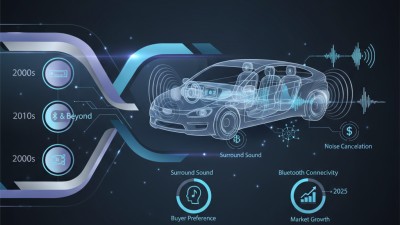
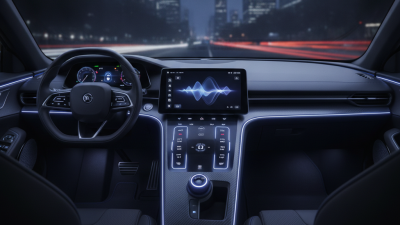
The global car music system market is changing from simple radio units to connected, software-driven cockpit platforms. Buyers now compare sound quality, screen responsiveness, smartphone integration, thermal stability, and long-term support. According to OICA’s 2023 production statistics, global motor vehicle output reached approximately 93.5 million units. That volume creates substantial demand for scalable automotive electronics suppliers.
Fortune Business Insights estimates that the global automotive infotainment market was worth USD 24.14 billion in 2023 and may reach USD 46.80 billion by 2032. Market definitions differ, however. A car music system can include speakers, amplifiers, head units, navigation, connectivity, and complete infotainment software. Therefore, the figures should guide decisions, not replace technical verification. This article reviews ten Chinese manufacturers serving global buyers, with attention to manufacturing capacity, product engineering, export experience, and after-sales support.
Practical evidence matters.
Reliable suppliers commonly demonstrate IATF 16949 quality management, ISO 9001 systems, EMC testing, and controlled production traceability. Compatibility with Apple CarPlay, Android Auto, CAN bus protocols, and regional radio standards also deserves careful review. The buyer should request sample units, wiring diagrams, firmware policies, warranty terms, and independent test records. Some supplier claims can sound impressive but remain difficult to compare. That is an unavoidable weakness in many market rankings. Our evaluation therefore combines public company information, industry reports, product documentation, and buyer-focused technical judgment. Performance inside a quiet showroom may not match performance under heat, vibration, or weak network coverage.
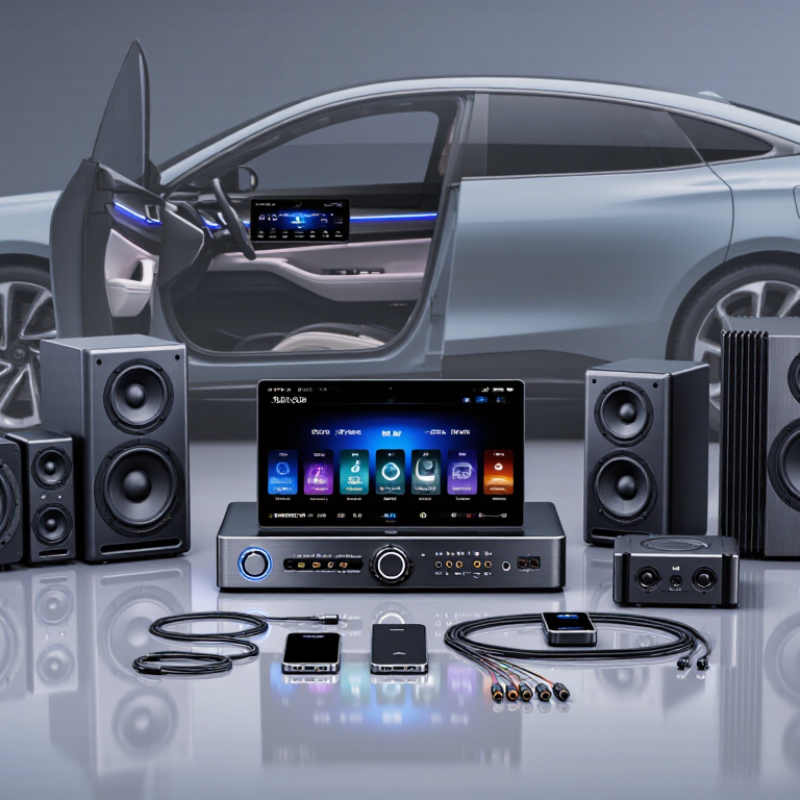
What Defines a Top Car Music System Manufacturer in China
A top car music system manufacturer combines acoustic engineering with strict automotive validation. OICA reported 93.5 million vehicles produced worldwide in 2023. That scale demands stable supply, not attractive samples alone. Manufacturers should control amplifier output, speaker impedance, thermal performance, and digital signal processing. They also need documented tests under heat, vibration, humidity, and voltage fluctuation. ISO 16750 and CISPR 25 provide useful benchmarks for environmental reliability and electromagnetic compatibility.
Real experience matters.
A capable factory can provide measurement charts, prototype records, and repeatable production data. Its engineers should explain frequency response, total harmonic distortion, noise levels, and microphone calibration in practical terms. Research from Fortune Business Insights identifies connected and integrated vehicle electronics as major growth areas in automotive infotainment. Therefore, compatibility with steering controls, factory displays, Bluetooth systems, and vehicle networks is increasingly important. A strong manufacturer also offers software updates, traceable components, and responsive technical support across different time zones.
However, no factory is flawless. A polished showroom can hide weak incoming inspection or inconsistent tuning between batches. Buyers should request pilot-run samples, failure-rate records, and independent test evidence. Cost remains important, but the cheapest amplifier may create heat, distortion, or warranty claims later. Manufacturers that openly discuss limitations often appear more reliable than those promising perfect sound. That honesty is not always convenient. It is valuable.
Comparative sourcing profile based on manufacturing capability, product coverage, quality systems, export readiness, and OEM/ODM service capacity
| Rank | Manufacturer Profile | Main Manufacturing Region | Established Since | Primary Product Categories | Typical Factory Area | Estimated Monthly Output | Quality & Compliance | OEM/ODM Capability | Typical MOQ | Export Coverage | Key Competitive Strength |
|---|---|---|---|---|---|---|---|---|---|---|---|
| 1 | Manufacturer Profile 01 | Shenzhen, Guangdong | 1998–2005 | 2-DIN receivers Digital media players Vehicle displays | 10,000–20,000 m² | 30,000–60,000 units | ISO 9001; CE; FCC; RoHS; automotive EMC testing | Full OEM/ODM | 100–300 units | North America, Europe, Southeast Asia, Middle East, Latin America | Strong software integration, fast product iteration, and mature export documentation |
| 2 | Manufacturer Profile 02 | Dongguan, Guangdong | 2000–2007 | Car radios Amplifiers Speakers Subwoofers | 8,000–15,000 m² | 20,000–45,000 units | ISO 9001; CE; FCC; RoHS; production traceability | Full OEM/ODM | 200–500 units | Europe, Africa, South America, Southeast Asia | Balanced audio performance, competitive component sourcing, and flexible private labeling |
| 3 | Manufacturer Profile 03 | Ningbo, Zhejiang | 2005–2010 | Vehicle head units Wireless audio systems Dash-integrated displays | 6,000–12,000 m² | 18,000–40,000 units | ISO 9001; CE; E-mark project support; RoHS | Full OEM/ODM | 100–300 units | Europe, Australia, Middle East, Southeast Asia | Good vehicle-fit customization and strong support for regional product variants |
| 4 | Manufacturer Profile 04 | Guangzhou, Guangdong | 2008–2012 | Android head units Rear-seat entertainment Parking-camera interfaces | 5,000–10,000 m² | 15,000–35,000 units | ISO 9001; CE; FCC; RoHS; functional testing | Full OEM/ODM | 100–200 units | Middle East, Africa, Latin America, Southeast Asia | Wide vehicle compatibility and efficient adaptation of dashboard-specific designs |
| 5 | Manufacturer Profile 05 | Huizhou, Guangdong | 2003–2009 | Car speakers Component speakers Amplifiers Bass systems | 8,000–16,000 m² | 25,000–55,000 units | ISO 9001; CE; RoHS; acoustic and reliability testing | Full OEM/ODM | 300–800 units | North America, Europe, Australia, Asia-Pacific | Specialized speaker engineering, stable acoustic consistency, and scalable assembly lines |
| 6 | Manufacturer Profile 06 | Shantou, Guangdong | 2010–2015 | Bluetooth receivers Compact car radios Portable vehicle audio | 3,000–7,000 m² | 12,000–30,000 units | ISO 9001; CE; FCC; RoHS; battery safety controls where applicable | OEM/ODM available | 300–1,000 units | Southeast Asia, Africa, Latin America, Middle East | Low-to-mid volume flexibility and cost-effective development for entry-level products |
| 7 | Manufacturer Profile 07 | Foshan, Guangdong | 2006–2012 | Vehicle infotainment Touchscreen receivers CAN-bus interfaces | 5,000–11,000 m² | 15,000–32,000 units | ISO 9001; CE; FCC; RoHS; software and hardware validation | Full OEM/ODM | 100–300 units | Europe, Middle East, South America, Southeast Asia | Strong integration of vehicle controls, steering-wheel functions, and display systems |
| 8 | Manufacturer Profile 08 | Wenzhou, Zhejiang | 1995–2005 | Car radios Dash speakers Automotive accessories | 7,000–14,000 m² | 22,000–48,000 units | ISO 9001; CE; RoHS; incoming-material inspection | OEM/ODM available | 300–800 units | Europe, Africa, South America, Central Asia | Long production experience, broad accessory portfolio, and dependable cost control |
| 9 | Manufacturer Profile 09 | Jiangsu Province | 2008–2014 | Premium amplifiers Digital signal processors Sound upgrade kits | 4,000–9,000 m² | 10,000–25,000 units | ISO 9001; CE; FCC; RoHS; electrical safety testing | OEM/ODM available | 200–500 units | Europe, North America, Australia, East Asia | Focus on signal processing, compact amplifier design, and higher-value audio upgrades |
| 10 | Manufacturer Profile 10 | Quanzhou, Fujian | 2000–2010 | Marine and vehicle audio Water-resistant speakers Outdoor audio systems | 4,000–8,000 m² | 10,000–28,000 units | ISO 9001; CE; FCC; RoHS; ingress and durability testing | OEM/ODM available | 200–600 units | North America, Europe, Australia, Southeast Asia | Durable product construction, weather-resistant designs, and specialist application knowledge |
| Data shown as practical sourcing ranges and capability indicators commonly used in international supplier evaluation. Actual production capacity, certifications, minimum order quantities, and market coverage should be verified through factory audits, current certificates, product testing reports, and purchase contracts. | |||||||||||